FEATURED CASE STUDY
Designing a Data Storytelling and Analytics Platform
Concepting, designing, and building a data storytelling and dashboard platform for a $4M initiative.
The Goal
Demonstrate how aggregated workforce data could be translated into meaningful, trustworthy data stories that support learning and insight across regions without misrepresenting individual communities.
Key Insights
Data stories must balance insight with responsibility—especially when representing multiple regions with uneven or incomplete data.
While aggregated data revealed valuable cross-regional patterns, workforce boards were understandably concerned about how thin or partial data might be interpreted when viewed publicly. Designing transparency and context into the experience became as important as the data itself.
My Role
Lead UX designer and data storyteller responsible for experience design, site design and build, collaboration with BI on data visualization, and stakeholder validation of a public pilot site.
My work included:
Defining the narrative structure for the Insights data story
Designing the architecture for interactive analytics dashboards
Translating complex workforce datasets into visualizations that support exploration and interpretation
Ensuring transparency and contextual framing when presenting aggregated cross-regional data
System Challenge
Regional workforce boards collect large volumes of federal and local program data but translating these datasets into clear insights about workforce participation, training outcomes, and employment patterns is difficult.
The O4O pilot explored whether aggregated data across regions could reveal patterns that individual regions could not see alone and whether those insights could be communicated responsibly through public data stories.
Designing the experience required balancing insight, transparency, and trust, particularly when some regions had more complete data than others.
My Challenge
Turn a complex, constrained, and incomplete shared data set into a coherent, public-facing experience while maintaining trust with workforce partners and avoiding misrepresentation.
Users
Primary users: Regional workforce boards participating in O4O cohorts
Secondary users: Policymakers, funders, and workforce system partners, and public viewers of the data storytelling site
Scope and Constraints
Two-year pilot with evolving team composition
Strict data governance and security requirements
Limited comparability across regional data sets
Sensitivity around public representation of local workforce efforts
My Process
Designing the Data Story Framework
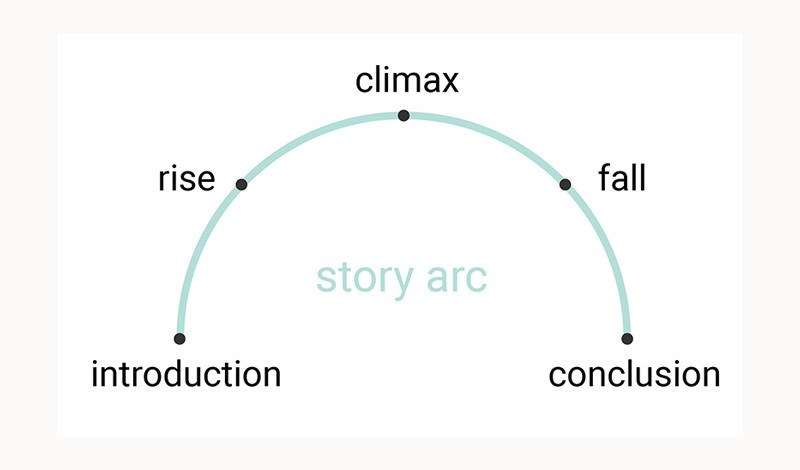
To help audiences interpret complex workforce data, I structured the Insights section using a narrative data storytelling model. The story introduced a workforce challenge, surfaced patterns in the data, and guided readers toward interpretable insights.
This structure helped connect high-level insights with the underlying data while providing context for how aggregated information could be understood.
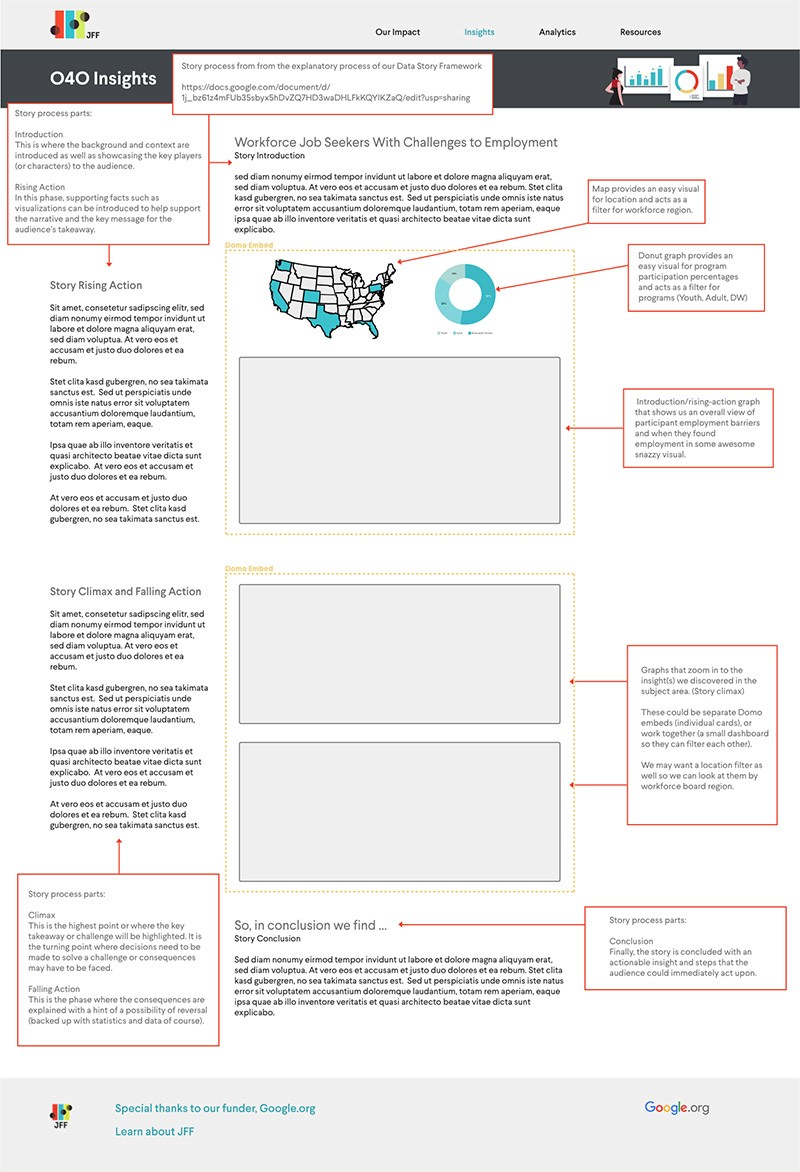
Insights data story framework (early design and planning)
View the insights storytelling wireframe
Designing the Analytics Architecture
Alongside a narrative data story, I designed an analytics layer that allowed users to explore workforce data directly.
The analytics architecture was organized around key workforce questions:
Who is participating in workforce programs
What training participants receive
Whether participants find employment
How workforce funding is spent
How workforce organizations perform
To support exploration, dashboards included global filters for region and time along with conditional filters for program type, equity segments, barriers to employment, and occupations.
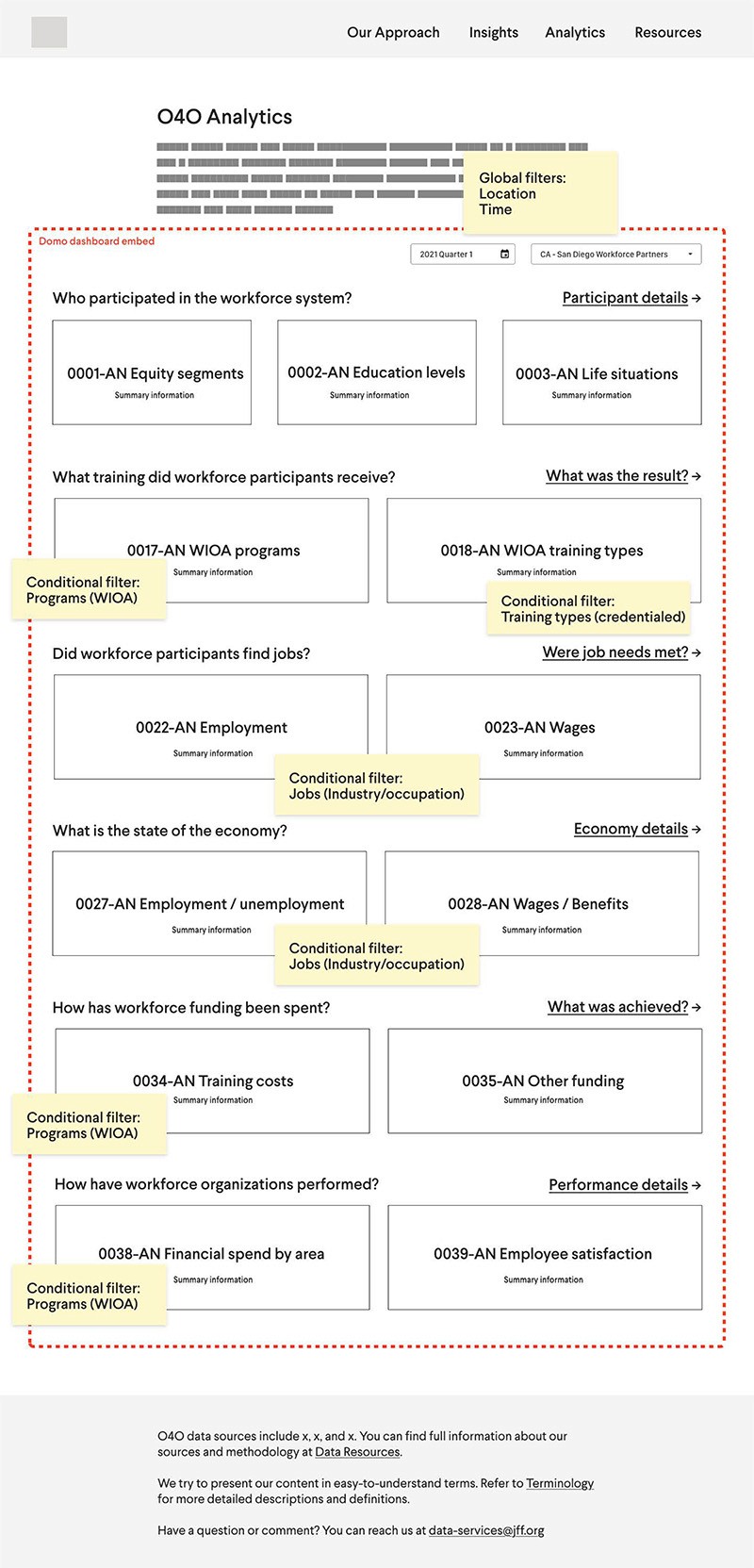
Analytics dashboard architecture
View the analytics architecture plan
Building the Pilot Site
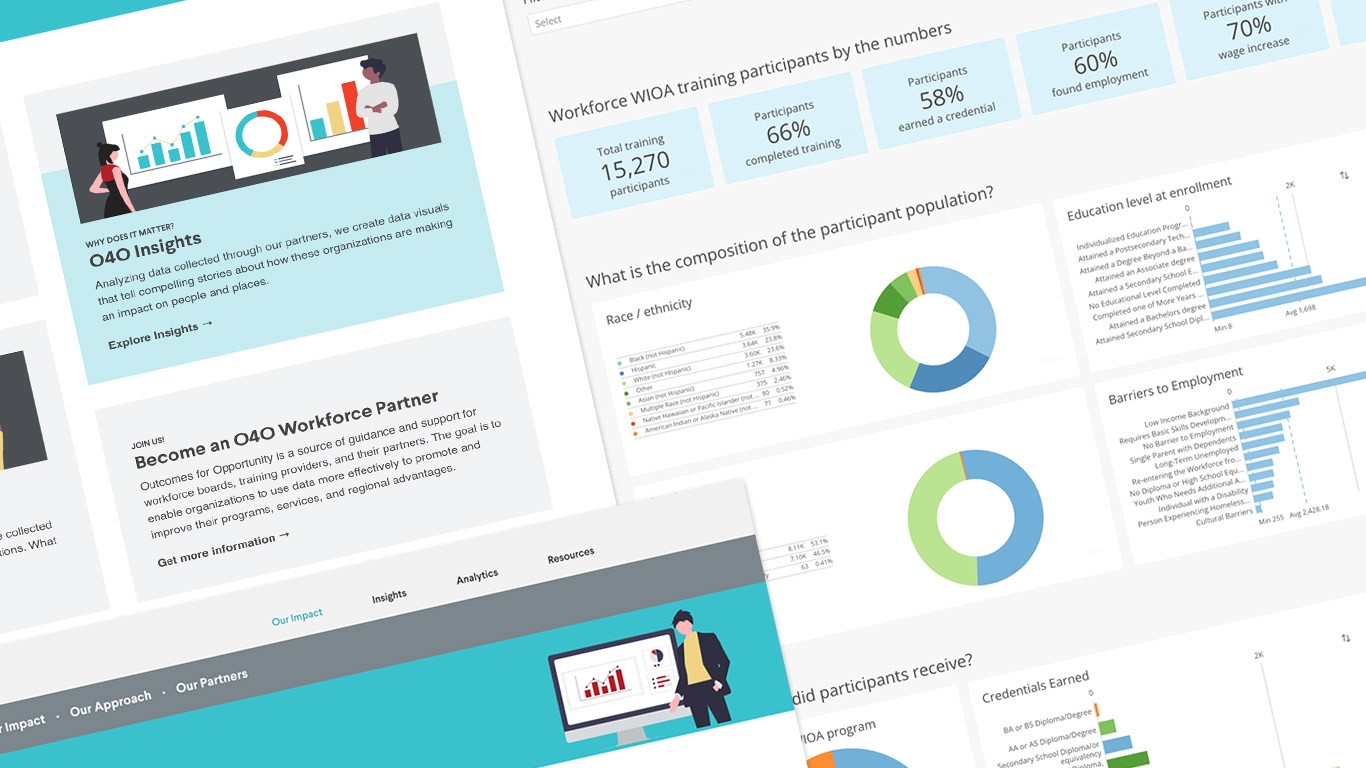
I designed and built a lightweight site that combined narrative insights with embedded dashboards. The site served as a public pilot to test whether aggregated workforce data could be presented in a way that surfaced meaningful patterns while maintaining transparency about the limitations of the data.
I partnered closely with a BI analyst to refine dashboards built in Domo, ensuring visualizations remained interpretable when embedded in the site.
Technical challenges with embedded dashboards, including cross-domain resizing and layout responsiveness, required direct collaboration with Domo support to stabilize the experience.
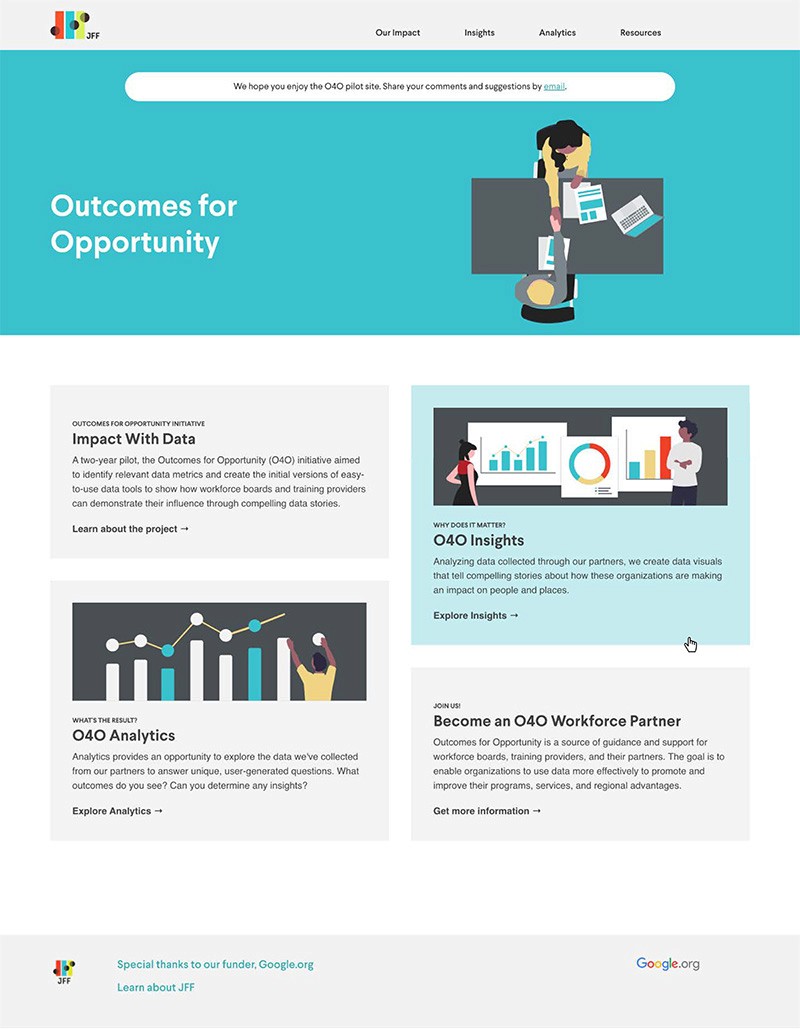
Outcomes for Opportunity pilot site screen snaps
View images of the pilot site
Validating With Workforce Partners
Before public release, we validated the pilot site with participating workforce boards.
These conversations surfaced important concerns about how aggregated data might represent local communities, particularly where data coverage was thin.
In response, we introduced several design patterns to support transparency:
Contextual explanations alongside visualizations
Clear disclaimers about dataset limitations
Narrative framing that emphasized patterns rather than rankings
These measures helped maintain trust with participating regions while allowing the pilot to demonstrate the potential of cross-regional data insights.
Impact
The pilot demonstrated how cross-regional workforce data could be communicated through narrative insights and exploratory analytics, while also revealing important limitations in aggregated workforce datasets.
Delivered a pilot data storytelling site demonstrating the potential of cross-regional workforce insights
Validated the concept with cohort workforce boards and external partners
Identified key limitations of aggregated regional data, informing future methodology, governance, and scaling considerations
Established design patterns for transparency and contextual framing such as disclaimers and narrative scaffolding to reduce risk of misinterpretation in public data products
Strengthened trust with cohort partners by explicitly addressing representation concerns prior to release
Informed future thinking about methodology, governance, and scale for multi-regional data products
Organizations
JFFLabs, Brighthive, Google.org (funder)
My Role
Lead UX Designer
Date / Duration
Sep 2020 - Jul 2022