CASE STUDY
Informing a Statewide Workforce Data Strategy
Synthesizing qualitative research to guide data sharing, governance, and decision-making across state agencies
About the Project
Led by The Connecticut Project and the Connecticut Office of Workforce Strategy, this initiative asked Jobs for the Future to provide recommendations for a statewide data-sharing model to improve workforce insights and strategic planning across Connecticut’s ecosystem.
The Goal
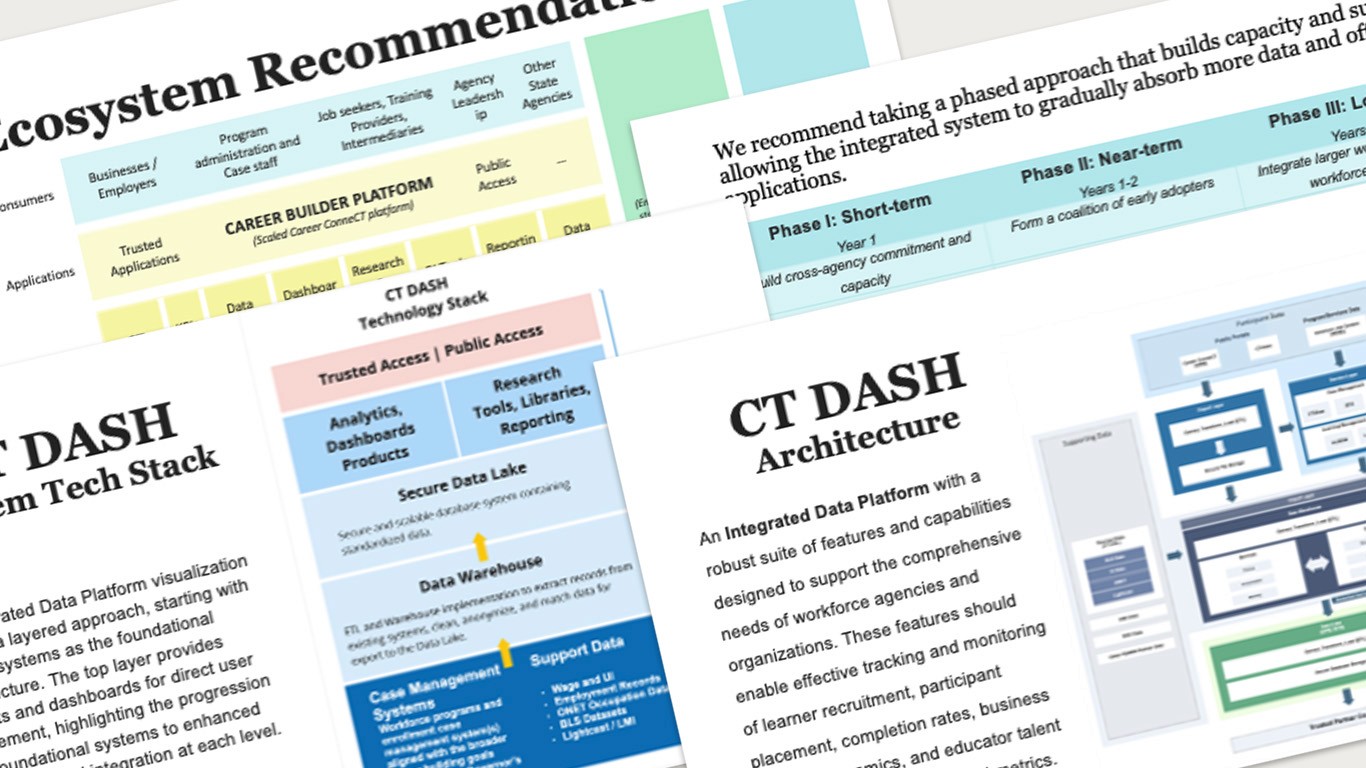
Using qualitative research insights, system mapping, and architectural modeling, the team developed a shared understanding of the workforce data ecosystem and explored approaches for a statewide data platform that could support analytics, reporting, and decision-making across agencies.
My Role
My focus was research synthesis and system sensemaking.
My team conducted interviews with workforce stakeholders across agencies, workforce boards, and program administrators. My role focused on synthesizing these interviews and related documentation to identify patterns, challenges, and opportunities within the workforce data ecosystem.
I reviewed more than 50 recorded stakeholder interviews, along with additional documentation provided by the client, and synthesized the findings into key insights about system fragmentation, data access challenges, and reporting limitations.
Working closely with a software architect, I translated these insights into ecosystem maps and system models that helped stakeholders understand the current workforce data landscape and explore potential approaches to a shared statewide data infrastructure.
The final strategic recommendations were developed collaboratively by the broader project team, informed by the research synthesis and system analysis.
Key Insight
Research synthesis revealed that Connecticut did not lack workforce data. Instead, workforce information existed across numerous agency systems that had evolved independently over time.
Programs collected extensive data on participants, employment outcomes, and services delivered. However, these datasets were stored in separate systems with limited mechanisms for integration, cross-agency reporting, or shared analysis.
As a result, leaders often lacked a comprehensive statewide view of workforce outcomes despite the volume of data being collected.
Research Insight
“The lack of a unified system makes it difficult to present a holistic view of workforce programs and the number of people served across agencies.”
The Process
Mapping the Workforce Ecosystem
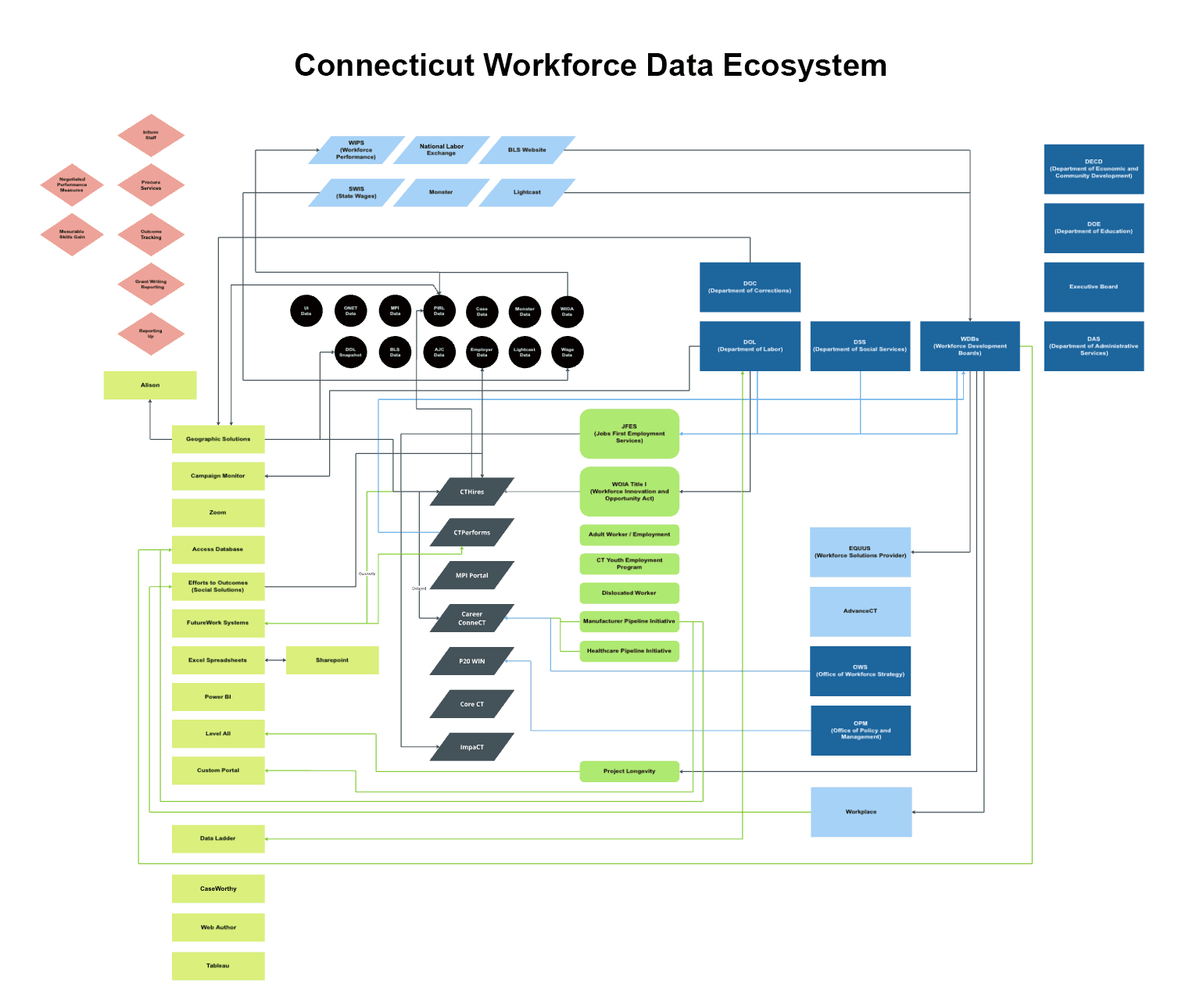
To help stakeholders understand the scale and complexity of the existing environment, I collaborated with the software architect to create a system landscape visualization.
Click image to enlarge
This ecosystem map illustrates the agencies, workforce programs, reporting tools, and external labor market data sources involved in workforce reporting across the state.
The visualization helped stakeholders see how workforce systems had evolved over time and how multiple programs relied on overlapping sets of systems and data sources.
Understanding the Workforce Data Workflows
In addition to mapping the ecosystem of systems, we also examined how data actually moved through the system during day-to-day program operations.
Research Insight
“Data collection and reporting processes involve multiple sources and manual efforts.”
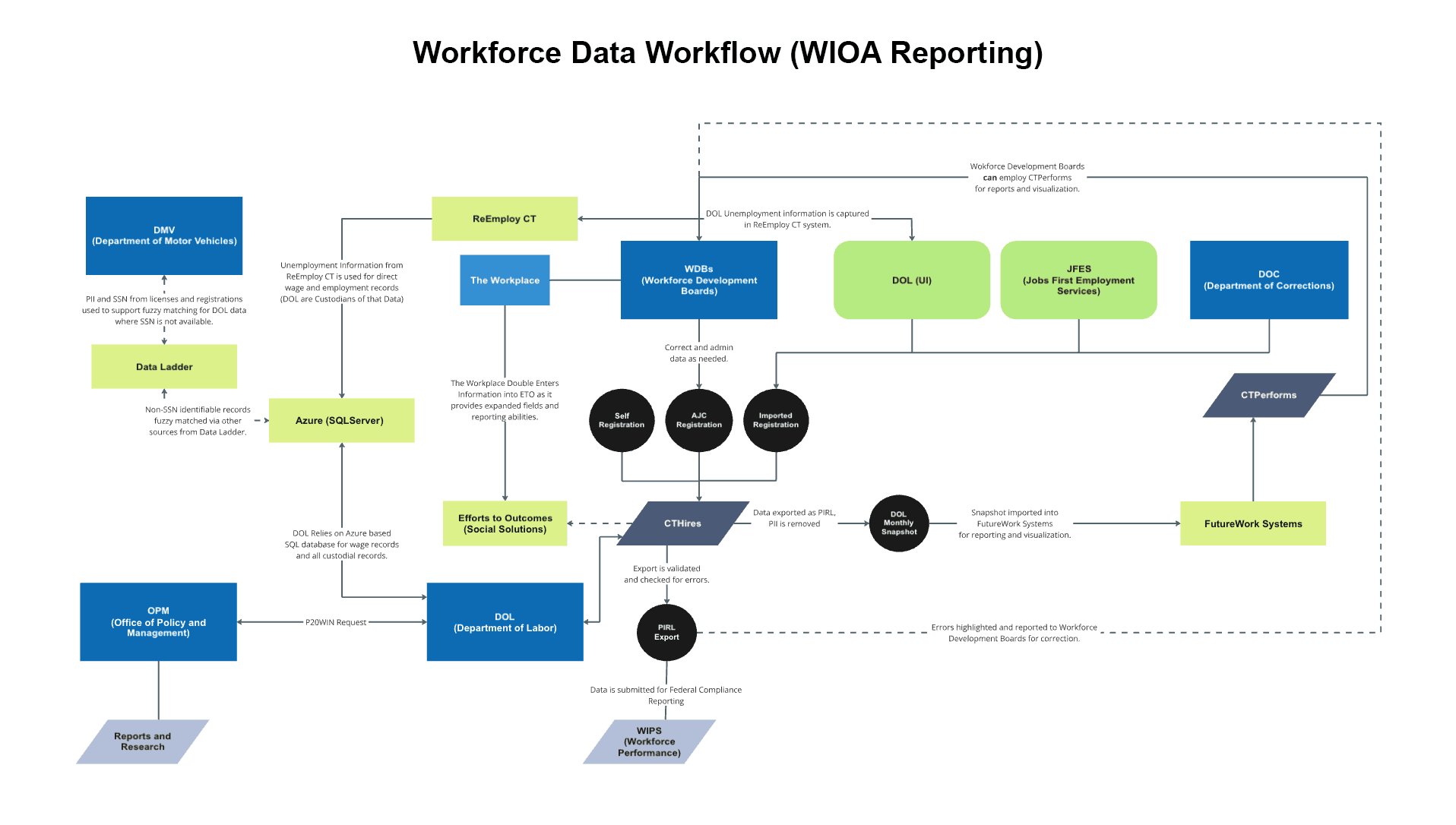
Interview participants described complex workflows in which program staff exported, transformed, and combined data from multiple systems in order to meet federal reporting requirements.
Click image to enlarge
This diagram illustrates how participant and employment data moved between agencies, workforce boards, and federal reporting systems under the Workforce Innovation and Opportunity Act (WIOA).
Mapping the workflow made visible the number of systems involved in generating workforce performance reports and highlighted the operational complexity faced by program staff.
Identifying Opportunities for a Shared Data Platform
The research synthesis and system mapping helped reveal opportunities for improving how workforce data could support decision-making across the state.
Research Insight
“Having access to real-time data at the state level could enable more informed and timely decisions.
Stakeholders expressed interest in a system that could:
Integrate data from existing workforce programs
Support cross-agency reporting and analytics
Improve visibility into workforce outcomes
Enable policymakers and program administrators to make better-informed decisions
These insights helped inform conversations about what a shared workforce data platform might look like.
Conceptualizing an Integrated Data Platform
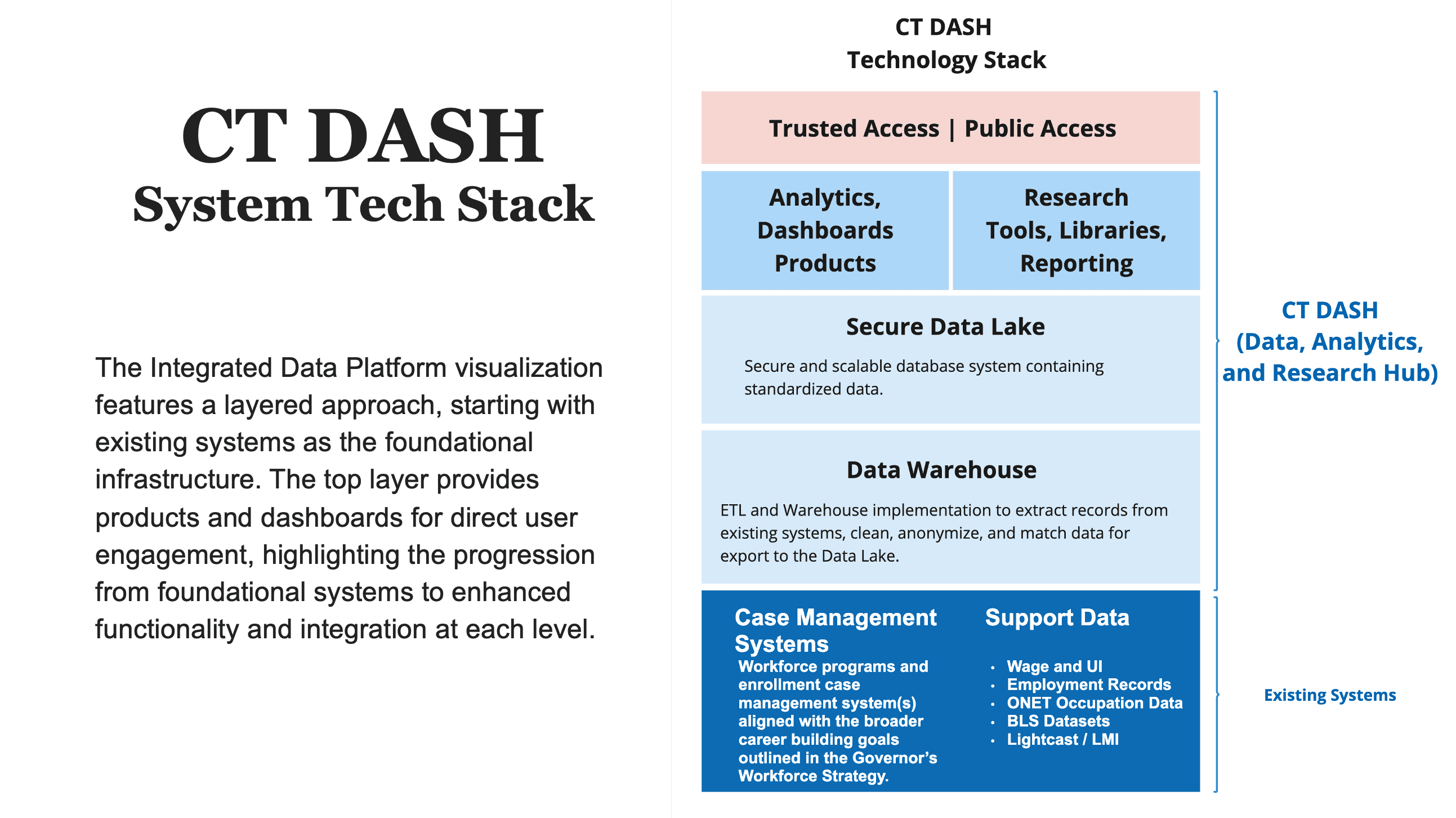
Working with a software architect, we explored how a layered data platform could integrate existing workforce systems while supporting analytics and reporting across agencies.
Click image to enlarge
This conceptual model illustrates how existing workforce systems could feed a shared data platform supporting analytics, dashboards, and research tools.
The model emphasizes a layered approach in which operational systems provide the foundational data infrastructure for analytics and reporting.
Proposed System Architecture
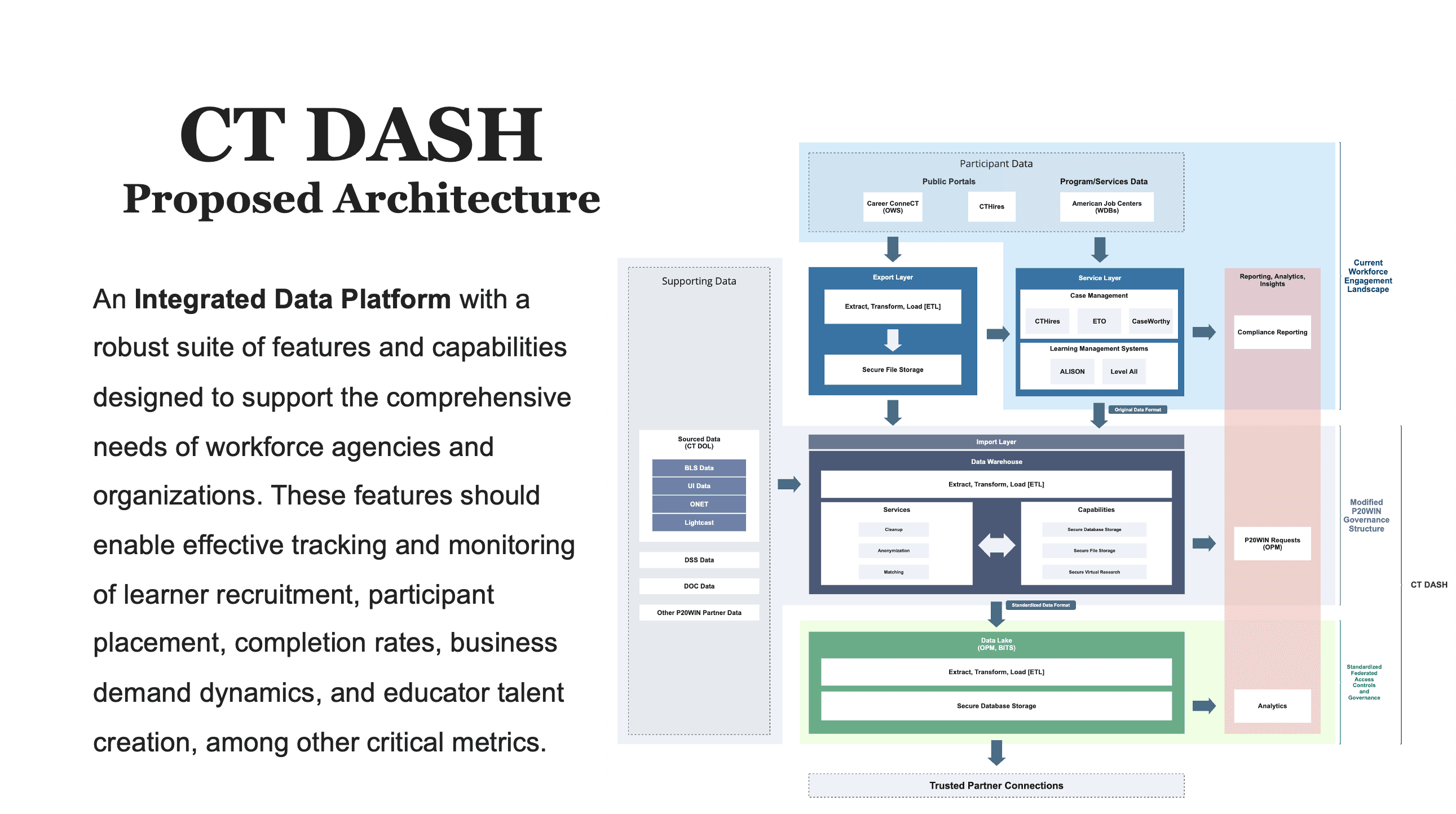
Building on the platform concept, the team explored a conceptual architecture showing how data from workforce programs and external sources could flow into a shared statewide infrastructure.
Working with the architect, I helped translate research insights and system constraints into visual models that supported these discussions.
Click image to enlarge
The architecture diagram illustrates how data from workforce programs, public portals, and labor market data sources could integrate into a centralized data warehouse and lake environment.
From there, analytics and reporting tools could generate insights for workforce boards, policymakers, and program administrators.
Strategic Recommendations
Click image to enlarge
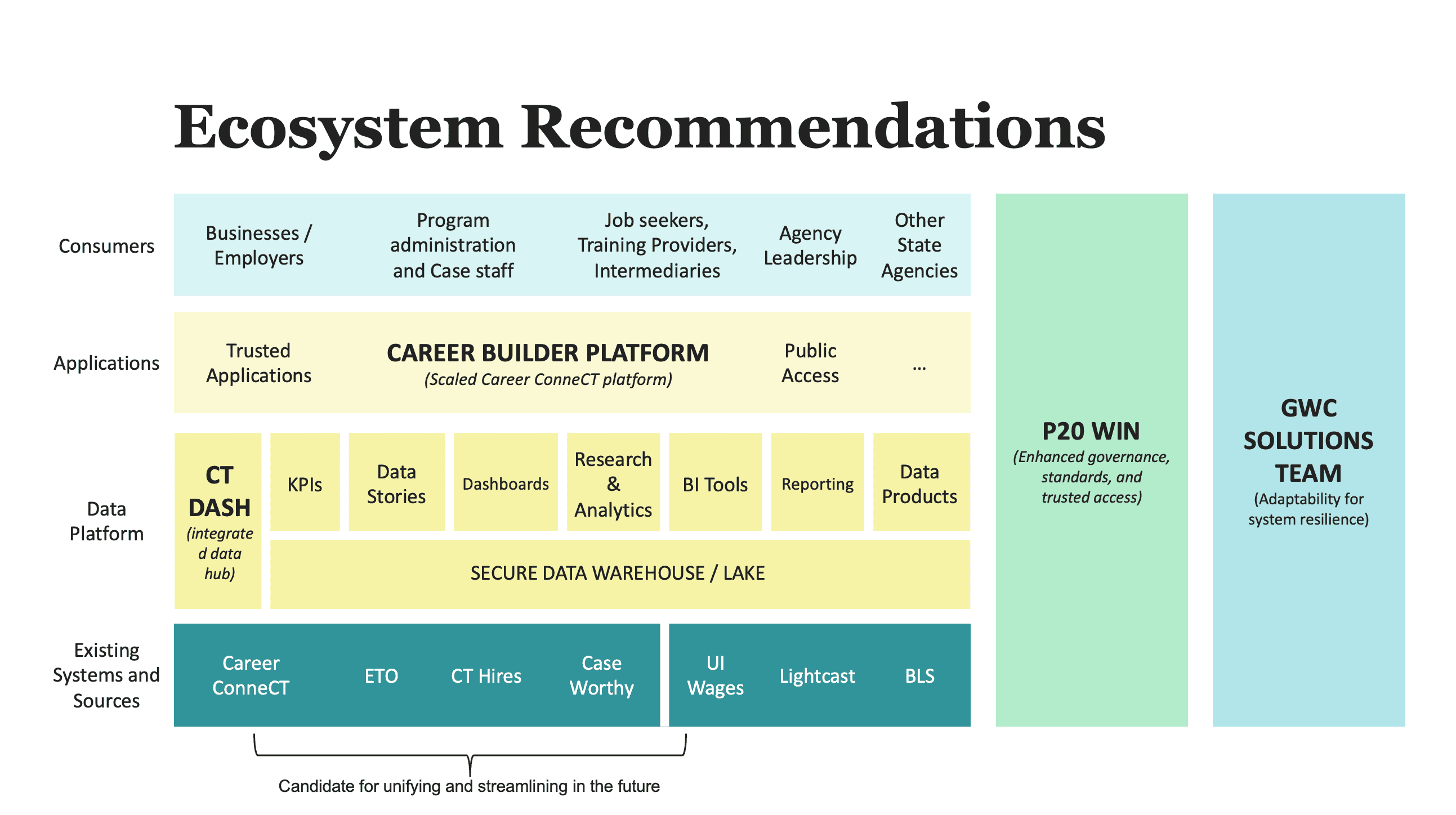
The recommendations framework outlines how platform infrastructure, governance structures, and workforce applications could support a statewide workforce data strategy.
Key elements included:
A shared data platform for workforce analytics
Integrated reporting and research tools
Governance models supporting cross-agency data sharing
Adaptable technical teams supporting system resilience
Outcomes
The research synthesis and system modeling helped stakeholders develop a shared understanding of the workforce data ecosystem and the challenges associated with integrating systems across agencies.
The visual system models provided a framework for discussing infrastructure investment, data governance, and the potential role of a statewide workforce data platform.
The work supported ongoing conversations about how a coordinated data strategy could improve workforce program evaluation, policy development, and cross-agency collaboration.
Research Artifact
A summary of insights synthesized from stakeholder interviews is available in this research synthesis document.
Organizations
JFF, CT Office of Workforce Strategy (OWS), CT Dept of Labor (CTDOL), The Connecticut Project (strategic advisor and funder)
My Role
UX Researcher and Service Designer
Date / Duration
Apr 2024 - Aug 2024