FEATURED CASE STUDY
Defining the User Landscape for Credential Quality Signals
Realigning a multi-stakeholder ecosystem to guide product investment for a $2.9M initiative.
The Goal
Enable employers to confidently trust and use non-degree credentials in hiring decisions by making outcomes-based quality signals legible, credible, and actionable.
Key Discovery
Early project assumptions focused on educators and employers as the primary audiences for a credential quality signal.
Discovery revealed the primary consumers of the EQOS Quality Signal were not educators or employers directly, but intermediaries, such as applicant tracking systems and education marketplaces.
Employers emerged as the system’s power brokers, however engagement occurs most effectively through the intermediaries who translate credential signals into hiring and training decisions.
This reframed the UX challenge from explaining credential quality to enabling intermediaries to operationalize trust at scale.
My Role
Lead UX researcher and strategist responsible for discovery planning, qualitative research, synthesis, and recommendations that informed next phase scope and product direction.
Impact
Project leadership and our funder adopted the discovery findings to reframe the initiative’s product strategy, shifting the next phase toward:
Intermediary-led use cases
Employer-driven adoption pathways
Tools designed to translate credential quality signals into operational hiring decisions
This positioned the initiative to pursue scalable integration points within the hiring ecosystem rather than direct employer adoption.
My Challenge
Validate whether educators and employers were the right primary audiences for an outcomes-based credential quality signal and identify a viable adoption pathway for early product development.
Users, Scope and Constraints
Initial audiences included educators, employers, funders, and policy makers, with workers and learners as downstream beneficiaries.
Given timeline and budget constraints, and with guidance from subject matter experts at Jobs For the Future (JFF), this phase prioritized educators and employers to validate where the highest early value and adoption potential existed.
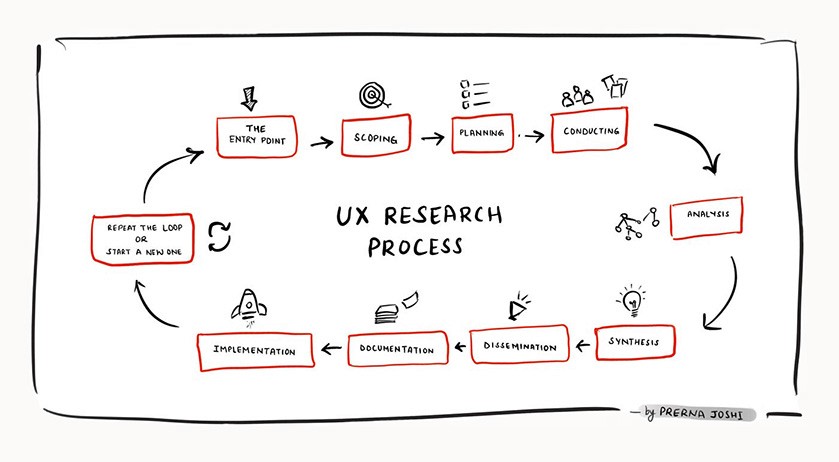
My Process
Audited existing research and publications from EQOS, JFF, and ecosystem partners to identify baseline assumptions
Framed initial hypotheses and designed a qualitative discovery plan
Conducted 10 interviews with education, workforce, and hiring intermediaries
Iteratively refined research questions and interview targets as patterns emerged
Synthesized findings into strategic recommendations presented to project leadership and funders
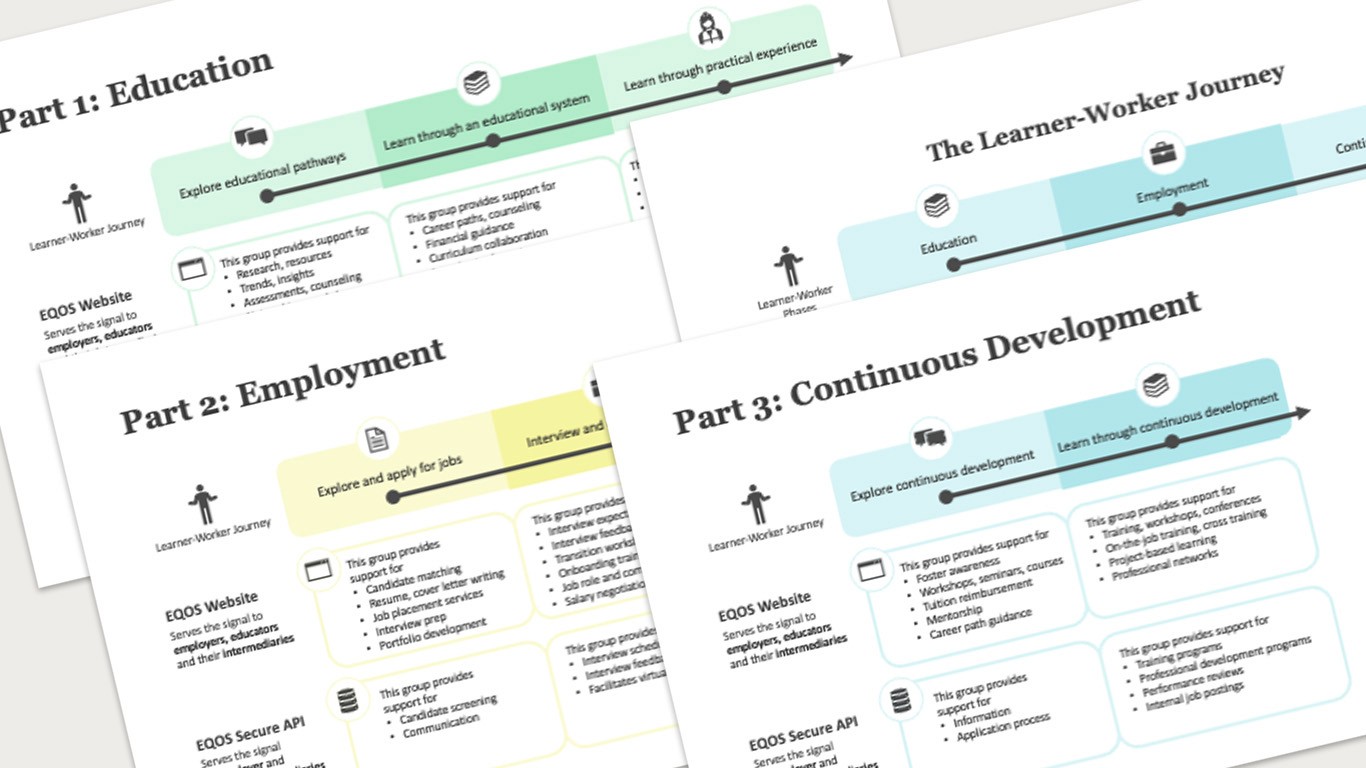
Research Artifact
The Phase 0 discovery synthesis captured ecosystem insights, adoption barriers, and early product recommendations that informed EQOS’s next development phase.
Organizations
EQOS, JFFLabs, Burning Glass Institute (BGI), Gitlab (funder)
My Role
UX Research Lead & Strategist
Date / Duration
Jun 2023 – Aug 2024