USER EXPERIENCE STRATEGY & DISCOVERY
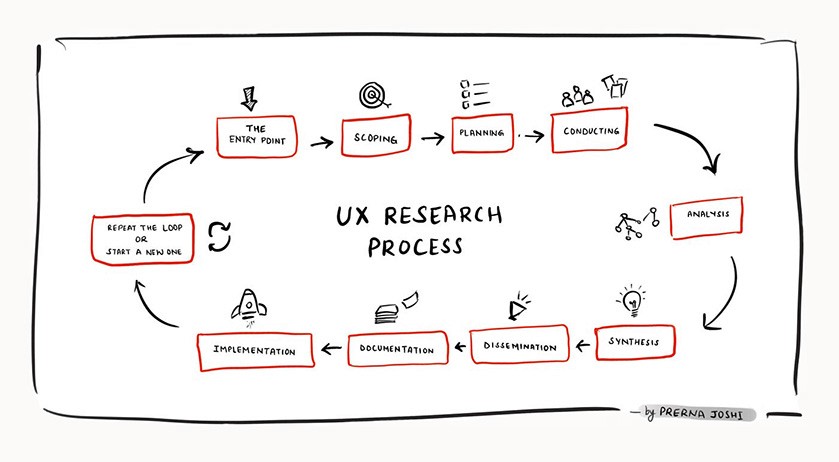
User Research
Methods to gather insights and data-driven validation for informed, human-centered decision-making.

Product Goal
Enable employers to confidently trust and use non-degree credentials in hiring decisions by making outcomes-based quality signals legible, credible, and actionable.
My Role
Lead UX researcher and strategist responsible for discovery planning, qualitative research, synthesis, and recommendations that informed next phase scope and product direction.
Key Insights
The effective audience targets were misaligned with the project’s initial hypothesis.
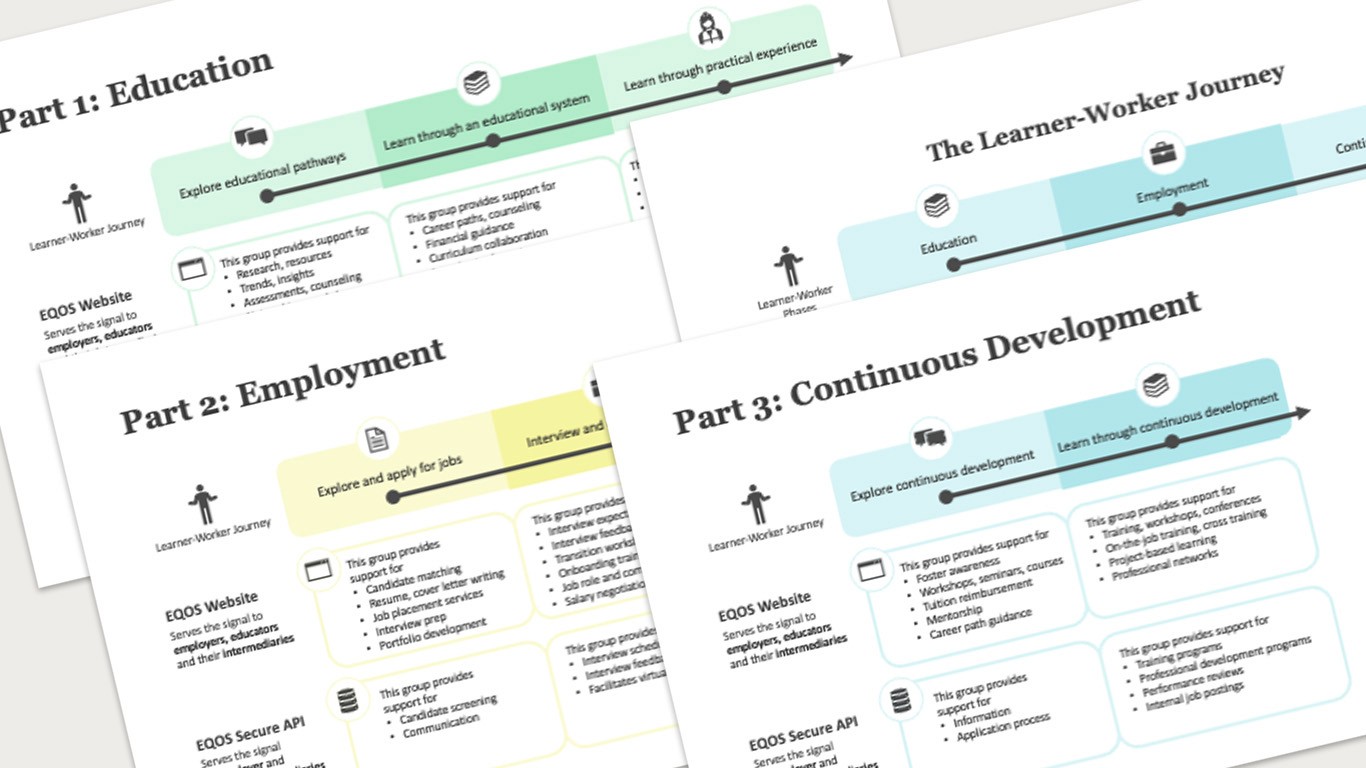
Through discovery, I learned the primary consumers of the EQOS Quality Signal were not educators or employers directly, but intermediaries (e.g., applicant tracking systems, education marketplaces) that translate credential quality into hiring and training decisions.
Employers emerged as the system’s power brokers—but engagement occurs most effectively through their intermediaries. This shifted the UX problem from explaining quality to enabling intermediaries to operationalize trust at scale.
Impact
Project leadership and our funder acted on these findings, refocusing the next phase of work on intermediary-led use cases, employer-driven adoption pathways, and tooling designed for translation rather than direct consumption.
My Challenge
Validate whether educators and employers were the right primary audiences for an outcomes-based credential quality signal—and identify a viable adoption pathway for early product development.
Users, Scope and Constraints
Initial audiences included educators, employers, funders, and policy makers, with workers/learners as downstream beneficiaries.
Given timeline and budget constraints, and with guidance from subject matter experts at Jobs For the Future (JFF), this phase prioritized educators and employers to validate where the highest early value and adoption potential existed.
My Process
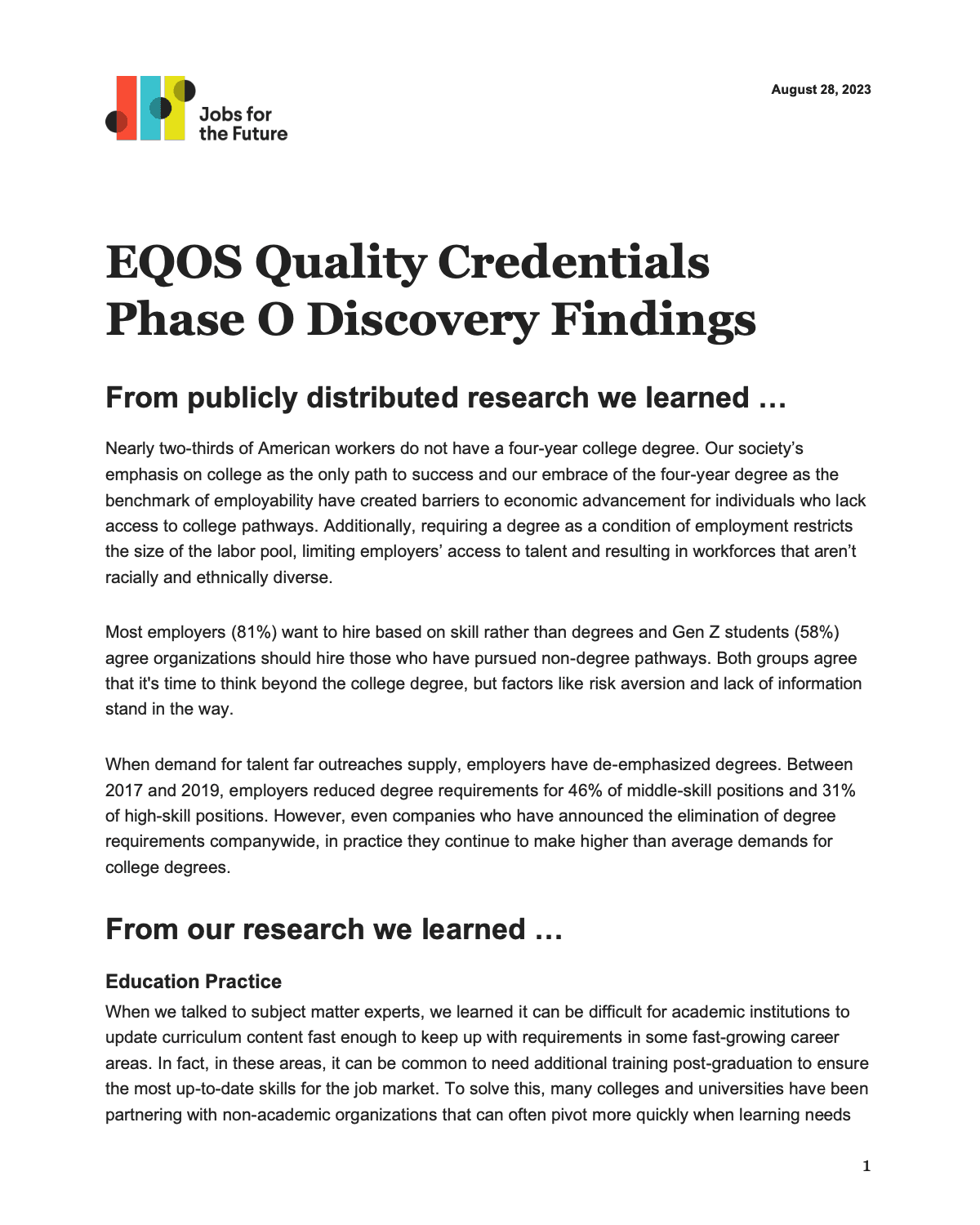
Reviewed dozens of publications from EQOS, JFF, and ecosystem partners to establish baseline assumptions
Developed initial problem statements and a qualitative interview plan
Conducted 10 interviews with internal SMEs and external education, workforce, and hiring intermediaries, focusing on trust signals, adoption barriers, and decision-making incentives
Iteratively refined questions as patterns emerged
Synthesized findings and presented recommendations to project leadership and funders
Organizations
EQOS, JFFLabs, Burning Glass Institute (BGI), Gitlab (funder)
My Role
UX Research Lead & Strategist
Date / Duration
Jun 2023 – Aug 2024
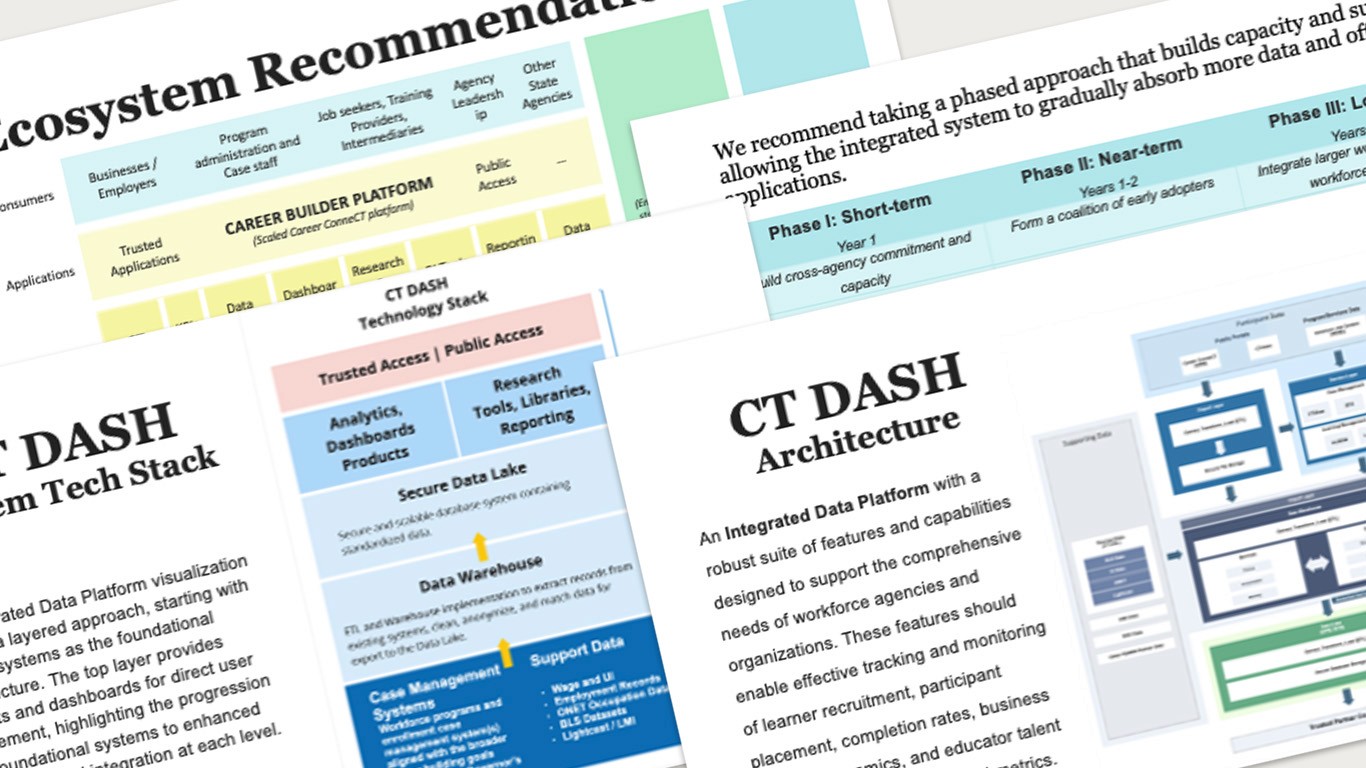
Informing a Statewide Data Strategy
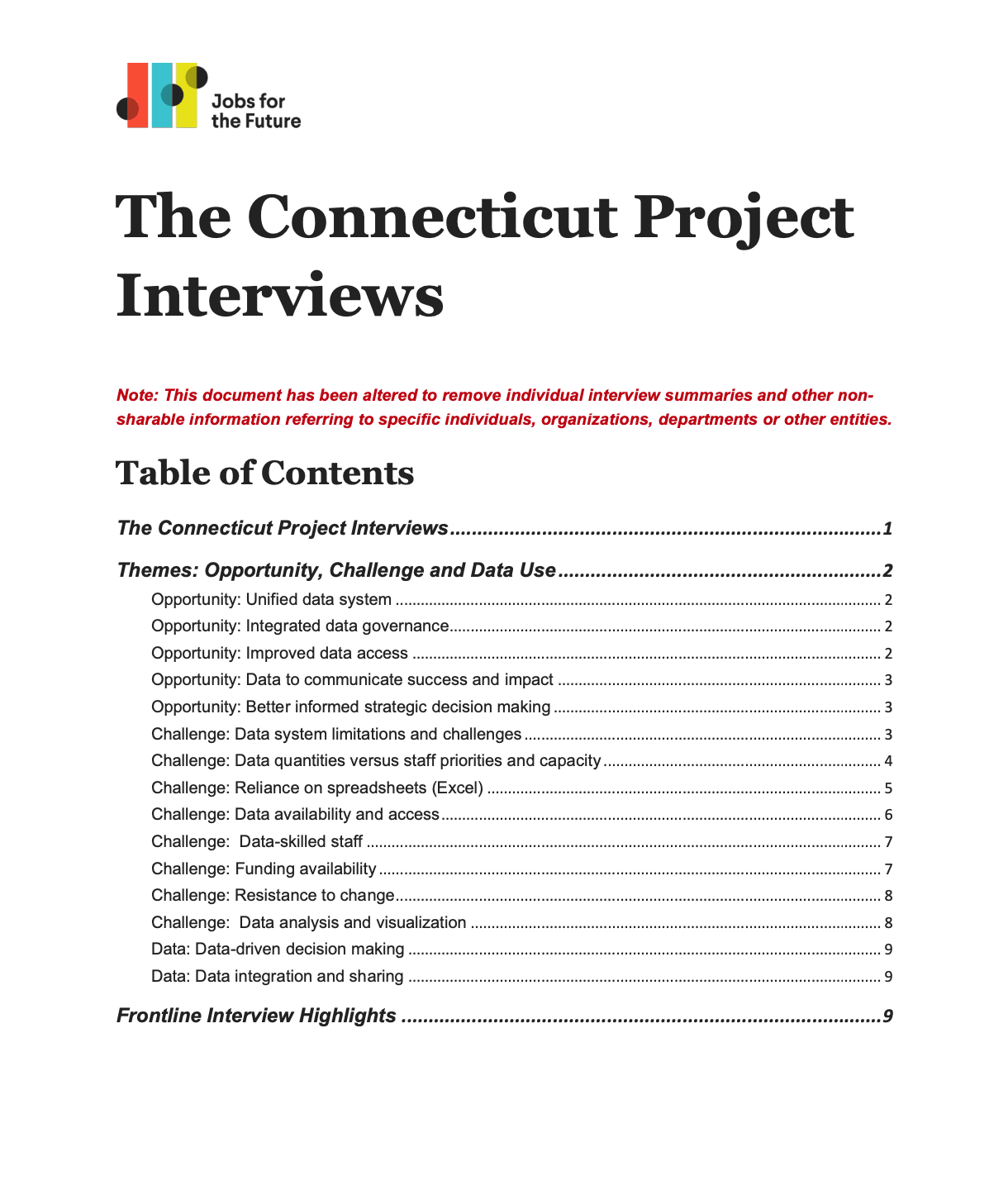
Led by The Connecticut Project and the Connecticut Office of Workforce Strategy, this initiative asked Jobs for the Future to provide recommendations for a statewide data-sharing model to improve workforce insights and strategic planning across Connecticut’s ecosystem.
Project Summary
Enable more effective workforce strategy and planning by improving how workforce data is shared, interpreted, and governed across state agencies.
Product / Program Goal
UX researcher and strategist responsible for large-scale qualitative analysis, cross-system synthesis, and translating complex stakeholder input into actionable insights for the project team.
My Role
I was tasked to analyze a set of interviews with over 50 individuals from various sectors of the Connecticut state government system to help inform the project team. My goal was to identify the data processes, systems, challenges and opportunities that spanned across diverse groups with varying agendas.
Key Insight
The primary barrier to an effective statewide data strategy was not technical feasibility—but internal politics, siloed ownership, and misaligned incentives across state groups.
Data systems reflected organizational boundaries rather than user or policy needs, making integration and shared insight difficult without addressing governance and trust first.
Impact
Provided early and ongoing synthesis that informed project direction throughout the engagement
Grounded final phased recommendations in political and organizational reality
Helped the team anticipate adoption risks and design a more realistic implementation path
My Challenge
Analyze and synthesize interviews with 50+ stakeholders across Connecticut’s workforce ecosystem to identify shared patterns, conflicts, and opportunities—while accounting for differing agendas, power dynamics, and system constraints.
Users
While recommendations were directed at state stakeholders, the downstream impact would be felt by job seekers, workers, employers, and state program participants.
Constraints
4-month analysis window
Large volume of qualitative data
Need to deliver insights incrementally, not just at project end
My Process
Conducted rapid desktop research to understand state agency roles, hierarchies, and interactions
Reviewed and annotated interview videos, transcripts, and shared documentation
Used Dovetail to tag systems, tools, data practices, challenges, and opportunities
Shared rolling insights with the team and compiled synthesized findings into a working analysis document
Organizations
JFF, CT Office of Workforce Strategy (OWS), CT Dept of Labor (CTDOL), The Connecticut Project (strategic advisor and funder)
My Role
UX Researcher & Strategist
Date / Duration
Apr 2024 - Aug 2024